
Monks of the Temple
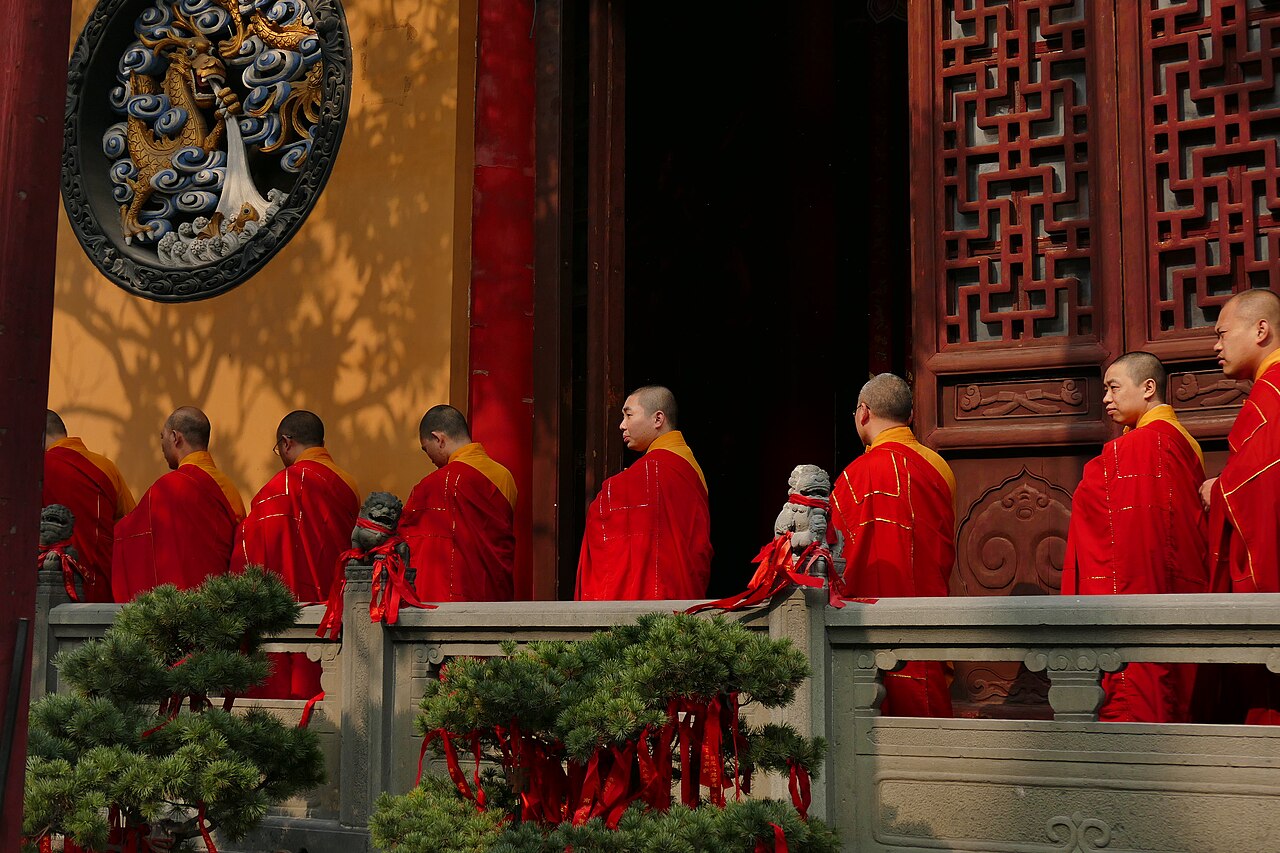
Ancient guardians keeping the temple and prophecy safe until the universe needs it most.

Wikimedia Commons · CC0
The Monks of the Temple are a mysterious and ancient order dedicated to safeguarding the Fifth Element, a mystical force capable of restoring balance to the universe. Residing in a remote desert temple, these guardians protect the temple and the Fifth Element itself, awaiting the prophesied moment when the cosmic threat must be confronted. Their duty does not specifically involve guarding four stones representing the four classical elements, but rather the temple and the elemental weapon that includes those stones.
- Role
- Guardians of the Temple and the Fifth Element
- Affiliation
- The Temple Order
- Location
- Remote Desert Temple (Earth)
- Primary Duty
- Protecting the Temple and the Prophecy
- Status
- Active / Ancient Order
Lore & Background
Long before the rise of modern civilization, the Monks established their sanctuary to shield humanity from the cyclical destruction that threatens existence every five thousand years. They are keepers of a specific prophecy and ritual, not universal mechanics experts. The order has survived wars, societal collapses, and technological leaps, their temple standing as a clearly visible, active structure in the desert—no illusion hides it. The Monks do not identify the chosen vessel for the Fifth Element; that task falls to the Mondoshawan and later to Cornelius. Their rituals involve the placement of four stones into a formation to channel energy as part of the weapon, but they do not guide the hero and the element together. When the evil or darkness approaches, their role is to maintain the temple and the prophecy, ensuring the barrier between life and annihilation holds through their prescribed rites.
In Their Own Story
The air inside the monastery was still, heavy with the scent of incense and ancient dust. A single monk stood before the altar, his eyes fixed on the four glowing stones arranged in a perfect square. Outside, the world burned with the chaos of the Great Evil's advance, but here, time seemed to pause. He whispered a prayer that had been passed down through generations, feeling the vibration of the fifth element stirring within the temple walls. It was time; the chosen one had arrived.
Reader's Guide
The Monks operate on a timeline far beyond human comprehension, marking cycles of destruction and rebirth that occur every five millennia. Their existence is tied directly to the prophecy of the Great Evil, a force that consumes worlds when balance is lost. While they appear as simple ascetics, their knowledge spans astronomy, metaphysics, and ancient history. They do not intervene in daily human affairs unless the survival of the universe is at stake, maintaining a strict policy of non-interference to preserve natural order. The temple itself acts as a containment field for the elemental stones; without the Monks' constant vigilance, the stones would lose their potency or be misused by those seeking power. Their silence regarding the Fifth Element ensures that only the worthy can discover its true nature.
Did You Know?
- The Monks have guarded the temple for thousands of years, surviving countless civilizations without ever hiding their location—the temple is a visible, active structure in the desert.
- They are keepers of a specific prophecy and ritual, not universal mechanics experts.
- The identification of the Fifth Element's vessel is performed by the Mondoshawan and Cornelius, not by the Monks as a whole.
- Their entire purpose revolves around a single event that happens once every 5,000 years.
Historical Origins and Silk Road Influence
The Xumishan Grottoes represent a monumental chapter in Chinese Buddhist history, originating during the Northern Wei dynasty between the fifth and tenth centuries. Situated on the eastern edge of Mount Xumi within the Ningxia Hui Autonomous Region, this complex of over 130 cave temples was strategically located along the ancient Silk Road. This positioning made it a vital conduit for religious exchange, allowing Buddhist traditions to flourish through trade connections with India and Central Asia. Before its transformation into a sacred landscape known as Fengyishan, the site evolved through periodic reconstructions that continued until the Tang dynasty. The artistic legacy of these interactions is evident in the decorative motifs found throughout the caves, which blend local styles with foreign influences brought by merchants and pilgrims traveling this historic route.
Architectural Layout and Sacred Artifacts
Carved directly into red sandstone cliffs, the site is organized into five distinct scenic areas: Dafo Tower, Zisun Palace, Yuanguang Temple, Xiangguo Temple, and Taohua Cave. While many of these caves lack elaborate decorative elements, they collectively house a significant array of religious art, including statues, wall paintings, and inscribed stelae. Scholars believe the primary function of these grottoes was to provide housing for monks, serving as both living quarters and places of worship. The most striking feature is a massive 65-foot statue depicting the seated future Buddha. Despite its grandeur, this iconic sculpture currently stands behind a protective fence, having suffered from significant erosion and damage due to past conservation efforts that failed to preserve its original integrity.
Environmental Vulnerabilities and Human Threats
Despite being designated as a National Level Cultural Relic Protected Site by the Chinese government in 1982, the Xumishan Grottoes face severe existential risks. The site is listed among the top 100 endangered architectural and cultural locations globally due to a combination of natural and human-induced factors. Natural elements pose a constant danger, with wind and sand erosion gradually wearing away the delicate red sandstone structures, while seismic activity from earthquakes further threatens their stability. Human impact exacerbates these issues through looting, vandalism, and insufficient management practices. These combined pressures have placed the ancient temples in a precarious position, requiring urgent attention to prevent irreversible loss of this historical treasure.
Controversial Conservation Efforts
The history of preserving the Xumishan Grottoes is marred by well-intentioned but damaging interventions that have accelerated decay rather than preventing it. A particularly notable instance occurred in 1982 when cement was applied to the massive seated Buddha statue in an attempt at architectural conservation. This improper technique has since contributed to the erosion of the artwork, highlighting a critical failure in understanding the material needs of ancient sandstone structures. The use of such modern materials without adequate scientific backing has compromised the site's authenticity and structural integrity. These missteps underscore the delicate balance required when managing cultural heritage sites and serve as a cautionary tale regarding the application of unsuitable restoration methods on fragile historical monuments.
Gallery
Frequently Asked Questions
Who are the Monks of the Temple?
They are an ancient order dedicated to safeguarding the Fifth Element and preserving the secrets of creation for millennia. Their specific role involves protecting these mystical forces from humanity until a cosmic threat necessitates their use.
Where do the guardians reside?
The Monks live in a secluded monastery on Earth that is hidden away from modern society and cities like New York. This isolation ensures they can maintain their vigil over the temple without outside interference.
What is the purpose of the four elemental stones?
These artifacts are kept secure by the order until the prophesied moment when balance must be restored to the universe. They serve as keys that allow the Fifth Element to awaken and combat impending destruction.
How do the Monks assist Korben Dallas and Leeloo?
The guardians entrust the heroes with the elemental stones needed to activate Leeloo's powers against the Great Evil. By releasing these protected items, they enable the protagonists to fulfill their destiny and save existence.
What is the current status of the order?
Although ancient, the Monks remain an active group committed to their duty as custodians of creation. Their story ends with success after handing over the stones, leaving them to continue watching from their temple.
More in Lore & History
Elsewhere in the The Fifth Element universe
Spotted an error? Know more?
This is a living reference — every entry is fact-audited, and reader corrections feed straight into our audit queue. Suggest an edit · See this site's audit record